
How to Get Rid of Dollar Spot in Your Lawn
There’s nothing quite like the pride of a beautiful, healthy lawn – until you notice those tell-tale straw-coloured patches scattered across your turf. If you’ve spotted these circular blemishes, you’re likely dealing with dollar spot disease, one of the most common lawn diseases affecting lawns across the Sunshine Coast and Gympie regions. The good news? With the right knowledge and approach, you can tackle this frustrating disease and restore your lawn to its former glory. Whether you’re maintaining a newly installed lawn or caring for established turf, understanding how to identify, prevent, and treat dollar spot is essential for keeping your outdoor space looking its absolute best.
What Is Dollar Spot and Why It’s a Problem for Your Lawn
Definition of Dollar Spot Disease
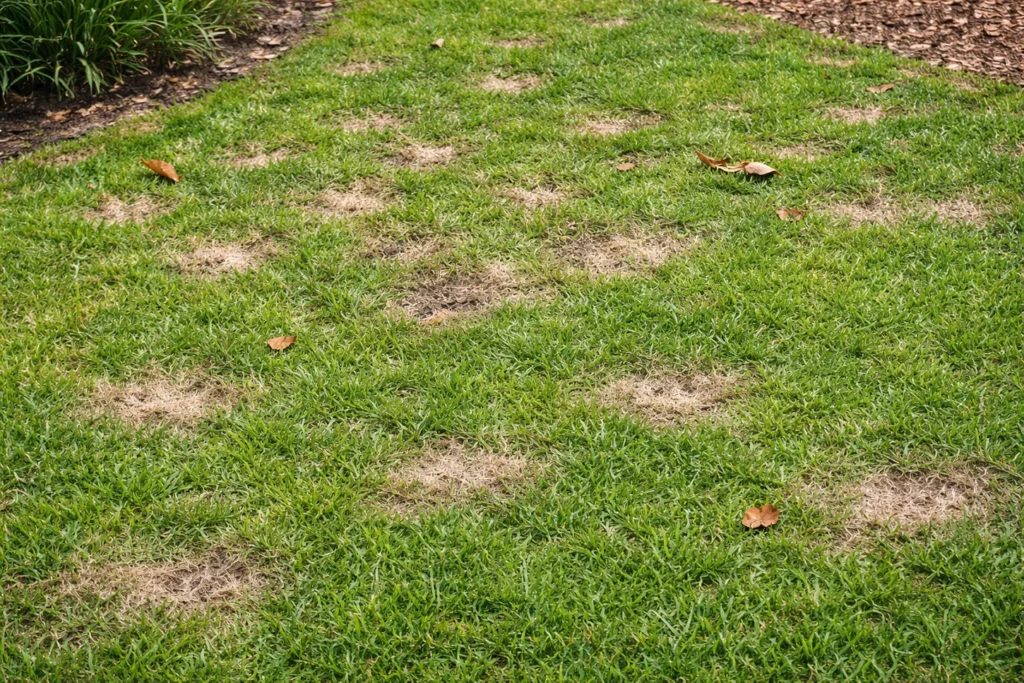
Dollar spot is a fungal disease caused by the pathogen Clarireedia species (formerly known as Sclerotinia homoeocarpa). It gets its name from the small, silver dollar-sized spots it creates on golf course greens, though on home lawns, these spots often merge into larger irregular patches. This persistent fungus thrives in our Queensland climate, particularly during the warm, humid conditions we experience throughout much of the year.
Common Symptoms to Watch For
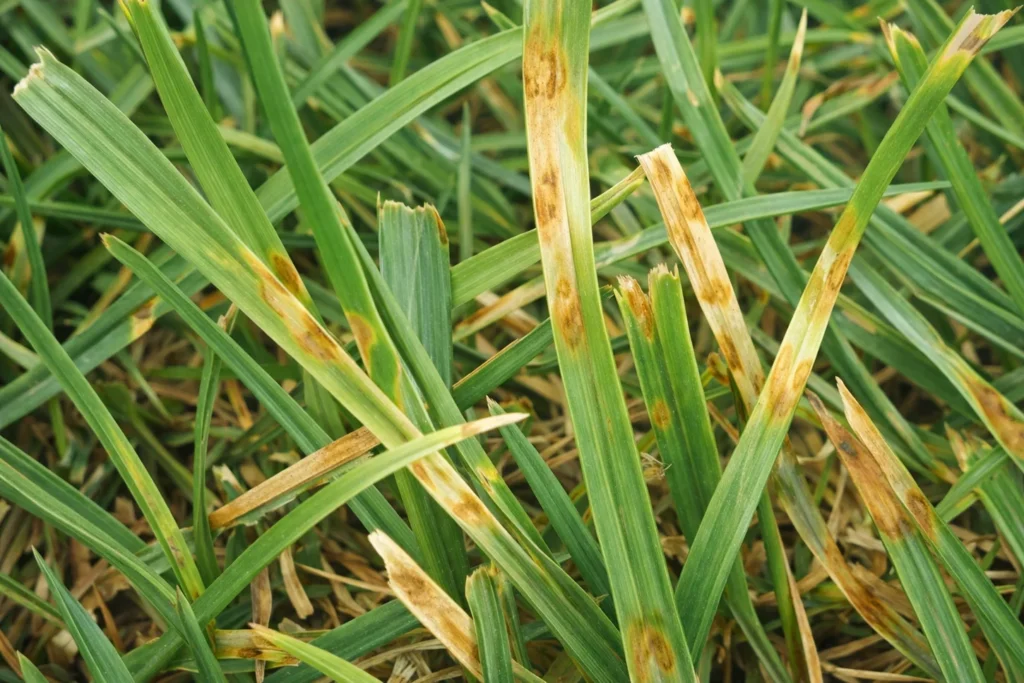
The first signs of dollar spot typically appear as small, circular patches ranging from the size of a 20-cent piece to about the size of your palm. These spots start out bleached or straw-coloured and can quickly spread across your lawn if left untreated. Look closely at individual grass blades and you’ll often see distinctive hourglass-shaped lesions with tan centres and reddish-brown borders. Early morning dew can also reveal another tell-tale sign – white, cobweb-like fungal growth (mycelium) across affected areas.
How Dollar Spot Affects Turf Health and Aesthetics
Beyond the obvious cosmetic damage, dollar spot weakens your turf’s overall health and resilience. The disease stunts grass growth, thins out the turf density, and creates entry points for weeds to establish themselves. Left unchecked, dollar spot can spread rapidly across your entire lawn, turning what was once a lush green space into a patchy, unsightly mess. The weakened grass also becomes more vulnerable to other stresses like foot traffic, drought, and additional diseases.
Identifying Dollar Spot in Your Lawn
Visual Signs on Grass Blades
The most reliable way to confirm dollar spot is by examining individual grass blades. Look for those characteristic hourglass or band-shaped lesions that start at the leaf tip and work their way down. These lesions typically have a bleached white or tan centre bordered by a reddish-brown or purple-brown margin. Unlike some other diseases that affect the entire blade uniformly, dollar spot creates these distinctive banded patterns that are quite unique.
Typical Lawn Conditions That Encourage Dollar Spot
Dollar spot loves specific conditions, and unfortunately, the Sunshine Coast and Gympie climate can provide exactly what it needs. The disease thrives when night-time temperatures sit between 15-25°C with high humidity levels. Extended periods of leaf wetness – from heavy dew, fog, or light frequent watering – create the perfect environment for the fungus to flourish. Low soil nitrogen levels and drought-stressed turf are also prime targets for dollar spot development.
Difference Between Dollar Spot and Other Turf Diseases
It’s easy to confuse dollar spot with other common lawn diseases, but there are key differences. Brown patch creates larger, more irregular circles with a darker border, whilst dollar spot produces smaller, more defined spots. Pythium blight tends to appear greasy and slimy, particularly in the morning, whereas dollar spot looks dry and bleached. If you’re unsure what you’re dealing with, it’s worth checking our comprehensive guide on lawn diseases in Australia or giving us a call for expert identification.
What Causes Dollar Spot to Develop
Environmental Triggers (Humidity, Moisture & Temperature)
Dollar spot disease is heavily influenced by environmental conditions. The fungus activates when temperatures range between 15-30°C, with the sweet spot being around 20-25°C – temperatures we see regularly throughout spring, summer and autumn on the Sunshine Coast. High humidity levels above 80% combined with prolonged leaf wetness create ideal conditions for spore germination and infection. Those beautiful misty mornings we experience? They’re unfortunately perfect for dollar spot development.
Soil Health and Nutrient Imbalances
Poor soil health is one of the biggest contributing factors to dollar spot outbreaks. When your lawn lacks sufficient nitrogen, it becomes far more susceptible to fungal diseases. The grass grows more slowly, produces thinner cell walls, and simply can’t defend itself effectively. Imbalanced soil pH levels – particularly acidic soils – can also increase disease pressure. Regular soil testing and proper fertilisation are your first line of defence against dollar spot and many other turf problems.
Stress Factors: Traffic, Mowing, Thatch, Irrigation Issues
Stressed turf is vulnerable turf. Compacted soil from heavy foot traffic reduces root health and makes grass more disease-prone. Mowing with dull blades tears the grass rather than cutting cleanly, creating wounds that fungal spores can exploit. Excessive thatch build-up (more than 12mm) creates a humid micro-environment at the soil surface where fungi thrive. Light, frequent watering that wets the leaves without penetrating the root zone is another common culprit – it’s one of the worst things you can do for dollar spot prevention.
Preventing Dollar Spot in Your Lawn
Best Lawn Care Practices to Reduce Disease Risk
Prevention is always easier (and cheaper!) than treatment. Start with a solid foundation: maintain adequate nitrogen levels through regular fertilisation – a balanced lawn care programme like our 8-week lawn care programme can make all the difference. Keep your mower blades sharp and stick to the golden rule: never remove more than one-third of the grass height at once. Regular mowing promotes healthy grass that’s better equipped to resist disease. Also, collect those grass clippings during active disease periods to avoid spreading fungal spores around your lawn.
Proper Watering Techniques to Discourage Fungal Growth
How you water matters just as much as how much you water. Deep, infrequent watering early in the morning is your best strategy. Aim to water 2-3 times per week (depending on weather conditions), delivering about 25mm of water per session. This encourages deep root growth whilst allowing the leaf surface to dry quickly, reducing the window of opportunity for fungal infection. Avoid evening watering – you don’t want your lawn sitting wet all night long. If you’re seeing extended leaf wetness from dew, consider lightly brushing or poling your lawn in the early morning to knock the moisture off the grass blades.
Seasonal Tips for Dollar Spot Prevention
Here in the Sunshine Coast and Gympie regions, dollar spot season typically runs from late spring through to early autumn. During these high-risk months, increase your vigilance. Apply a slow-release nitrogen fertiliser in early spring to boost turf health before disease pressure builds. During summer, raise your mowing height slightly to reduce plant stress – taller grass is more resilient. Reduce nitrogen applications during the hottest months if you’re experiencing drought conditions, as lush, soft growth can actually increase disease susceptibility when water is limited.
Natural and Cultural Controls for Dollar Spot
Improving Soil Fertility and pH Balance
Building healthy soil is the foundation of disease prevention. Have your soil tested to determine its pH level and nutrient status – your local agricultural extension office or a soil testing laboratory can help with this. Most turf grasses prefer a slightly acidic to neutral pH between 6.0-7.0. If your soil is too acidic, apply lime according to soil test recommendations. If it’s too alkaline (less common in our area), sulfur can help lower the pH. Maintain consistent nitrogen levels throughout the growing season, but avoid excessive applications which can promote lush, disease-prone growth.
Aeration, Thatch Management and Mowing Practices
Core aeration is one of the best things you can do for overall lawn health and disease prevention. Aerating once or twice a year relieves soil compaction, improves water and nutrient penetration, and helps reduce thatch accumulation. If thatch exceeds 12mm, consider dethatching or verticutting to remove excess organic material. These practices improve air circulation at the soil surface, making conditions less favourable for dollar spot development. And remember those mowing tips we mentioned earlier? Keeping blades sharp, maintaining proper height, and avoiding cutting wet grass all contribute to a more disease-resistant lawn.
Selecting Disease-Resistant Turf Varieties
If you’re installing new turf or renovating your lawn, choosing disease-resistant varieties can save you headaches down the track. Some modern turf cultivars have been specifically bred for improved dollar spot resistance. When selecting turf, ask about disease tolerance ratings. At Roberts Turf Supplies, we can help you choose the right grass variety for your specific conditions in the Sunshine Coast or Gympie area – varieties that will thrive in our climate whilst showing good resistance to common diseases like dollar spot.
Fungicide Options to Treat Dollar Spot
When to Apply Fungicides for Best Results
Timing is everything when it comes to fungicide applications. The most effective approach is preventative application – treating before visible symptoms appear, particularly during high-risk periods. Once you’ve identified dollar spot in your lawn, act quickly before it spreads further.
Fungicides work best when applied at the first sign of disease or when environmental conditions favour disease development. For the Sunshine Coast and Gympie regions, this typically means being ready to treat from October through to April, with peak disease pressure in the warmer, humid months.
Systemic vs. Contact Fungicides Explained
Understanding the difference between fungicide types helps you make informed treatment decisions. Contact fungicides work on the surface of the plant, creating a protective barrier that prevents fungal spores from penetrating grass tissue. They’re excellent for prevention and early-stage treatment but won’t cure established infections deep within the plant. Systemic fungicides, on the other hand, are absorbed by the plant and move through its vascular system, treating infections from within. They’re more effective on established disease but also more expensive. Many lawn care professionals use a combination approach for best results.
Mancozeb — A Reliable Contact Fungicide for Dollar Spot
Mancozeb has been a trusted workhorse in turf disease management for decades, and for good reason. This broad-spectrum contact fungicide is highly effective against dollar spot when applied correctly. It’s relatively affordable, widely available, and has a good safety profile when used according to label directions. Mancozeb works by preventing fungal spores from germinating and establishing infection, making it an excellent choice for both preventative applications and early-stage treatment of dollar spot disease.
How Mancozeb Works Against Fungal Diseases
Mancozeb is a multi-site inhibitor, which means it disrupts multiple biochemical processes within fungal cells simultaneously. This multi-pronged attack makes it highly effective and also reduces the risk of fungi developing resistance to the fungicide. When applied to turf, Mancozeb creates a protective coating on grass blades that prevents fungal spores from penetrating the leaf surface. It’s particularly effective when applied before or at the very first signs of disease, stopping dollar spot in its tracks before it can establish and spread throughout your lawn.
Application Rates, Timing and Safety Tips
For dollar spot control, Mancozeb is typically applied at rates of 200-250 grams per 100 square metres, mixed with water according to label instructions. Apply in calm conditions (wind less than 15 km/h) using a calibrated sprayer to ensure even coverage. Water the fungicide in lightly after application if rain isn’t forecast within 24 hours. Reapplication is usually necessary every 7-14 days during active disease periods. Always wear appropriate personal protective equipment – long sleeves, pants, gloves, and eye protection. Keep children and pets off treated areas until the spray has dried completely. You can find quality Mancozeb at our locations, and we’re always happy to provide application advice.
Combining Mancozeb with Other Turf Management Strategies
Fungicides are most effective when they’re part of an integrated disease management approach. Think of Mancozeb as one tool in your toolbox, not the entire toolbox. Combine fungicide applications with improved cultural practices: proper fertilisation, correct watering schedules, regular mowing, and thatch management. This integrated approach not only improves disease control but also reduces your reliance on fungicides over time. During active treatment, continue your regular lawn maintenance routine, being careful to clean your mower deck and equipment between uses to avoid spreading fungal spores to unaffected areas.
Step-by-Step Guide: Treating Dollar Spot in Your Lawn
Diagnosis and Treatment Planning
Before you start any treatment, confirm you’re actually dealing with dollar spot. Examine grass blades for those characteristic hourglass lesions, check for cobweb-like mycelium in early morning, and assess the size and pattern of affected areas. Evaluate your lawn’s overall health and recent maintenance history – this helps identify contributing factors you’ll need to address. Map out the affected areas and assess the severity. Light infestations might respond to cultural controls alone, whilst moderate to severe cases will likely require fungicide intervention combined with improved lawn care practices.
Fungicide Application Workflow
Here’s your step-by-step application process: First, mow your lawn (collecting clippings) 1-2 days before treatment, but not immediately before – you want some leaf surface for the fungicide to adhere to. Choose a calm, dry morning when no rain is forecast for at least 24 hours. Calibrate your sprayer and mix Mancozeb according to label directions. Apply evenly across affected areas and a buffer zone of healthy turf surrounding the spots. Use overlapping passes to ensure complete coverage. Clean your sprayer thoroughly after use to prevent corrosion. Water in lightly if the fungicide label recommends it, or allow it to dry naturally. Keep foot traffic to a minimum for 24-48 hours after application.
Monitoring Progress and Follow-Up Care
After your initial treatment, monitor your lawn closely. You should see disease progression halt within 3-7 days and gradual recovery over 2-4 weeks. Take photos to document progress – it’s easy to forget where you started! Continue your improved maintenance practices: proper watering, regular mowing, and adequate fertilisation. If disease persists or spreads after 10-14 days, a second fungicide application may be necessary. Once dollar spot is under control, shift to a preventative maintenance schedule. During high-risk periods, consider light preventative fungicide applications every 21-28 days if your lawn has a history of recurring problems.
FAQs About Dollar Spot and Lawn Fungicides
How Long Before I See Improvement?
With proper treatment, you should see disease activity stop within 3-7 days – meaning no new spots developing and existing spots not expanding. However, visual recovery of the damaged turf takes longer. The bleached grass blades won’t turn green again, but new healthy growth should emerge from the crown within 10-14 days under good growing conditions. Complete aesthetic recovery typically takes 3-4 weeks, depending on grass variety, growing conditions, and the severity of the infection. Patience is key – and maintaining those improved cultural practices speeds up recovery considerably.
Can I Use Organic Fungicides Instead?
Yes, there are organic and natural fungicide options available, though they’re generally less effective than synthetic products like Mancozeb for treating established dollar spot infections. Products containing beneficial microbes (like Bacillus species), biofungicides, or naturally-derived compounds like neem oil can provide some disease suppression, particularly when used preventatively. They work best when combined with excellent cultural practices. If you prefer organic approaches, focus heavily on soil health, proper fertilisation, and environmental management. For severe outbreaks, you might need to use synthetic fungicides initially, then transition to organic maintenance once the disease is under control.
Is Dollar Spot Harmful to Pets or People?
The fungus that causes dollar spot (Clarireedia species) is not harmful to humans or animals. It only affects grass plants. However, fungicides used to treat dollar spot do require sensible precautions. Products like Mancozeb are considered low-toxicity when used correctly, but you should still keep pets and children off treated areas until the spray has completely dried. Follow all label directions regarding safety equipment during application and re-entry intervals. If you have concerns about chemical use, focus on cultural and mechanical controls first, and consider spot-treating only severely affected areas rather than blanket applications across your entire lawn.
How Can I Prevent Dollar Spot from Coming Back?
Prevention is all about creating conditions that favour your grass over the fungus. Maintain adequate nitrogen fertility throughout the growing season – this is absolutely critical. Water deeply and infrequently in the early morning rather than light, frequent evening watering. Reduce thatch build-up through annual aeration and proper mowing practices. During high-risk periods, brush or pole dew off your lawn in early morning to reduce leaf wetness duration. If you’ve had recurring problems, consider whether your turf variety is well-suited to your conditions, or look into our turf installation services to upgrade to more disease-resistant varieties.
What’s the Difference Between Dollar Spot and Brown Patch?
Whilst both are fungal diseases, there are clear differences. Dollar spot creates smaller, bleached circular spots (usually 5-10cm diameter) with those distinctive hourglass lesions on grass blades. Brown patch produces larger, circular patches (30-90cm or more) with a dark grey to purplish border when active. Brown patch also tends to appear during hotter, more humid conditions than dollar spot. The leaf lesions differ too – brown patch creates irregular tan lesions rather than the banded hourglass pattern. If you’re uncertain which disease you’re dealing with, we can help with identification – proper diagnosis ensures you choose the right treatment approach.
Protecting Your Investment: Professional Support for a Healthier Lawn
Dollar spot doesn’t have to be a recurring nightmare in your lawn care routine. With proper identification, timely treatment, and – most importantly – improved maintenance practices, you can keep this common fungal disease under control and maintain the beautiful turf you work hard to achieve. Remember, the healthiest lawns are those that receive consistent, appropriate care throughout the year, not just reactive treatment when problems arise.
If you’re struggling with dollar spot or any other lawn disease, you don’t have to tackle it alone. Whether you need quality turf supplies, expert advice, or professional turf installation and maintenance services, we’re here to help lawn owners across the Sunshine Coast and Gympie regions keep their turf in top condition.
Ready to restore your lawn to its former glory? Visit our turf farms to pick up everything you need, from premium quality turf to professional-grade fungicides and fertilisers. Our experienced team can provide personalised advice based on your specific lawn conditions and help you develop a comprehensive lawn care strategy that works.
Got a question? Just call us—help is always at hand.
Call us today on 07 5478 9438
Visit our turf farms at:
Roberts Turf Supplies Sunshine Coast
520, Chevallum Road, Chevallum, QLD 4555
https://maps.app.goo.gl/yRud5D78NqBZE1fs6
Roberts Turf Supplies Gympie
54 Wide Bay Hwy Bellsbridge QLD 4570
https://maps.app.goo.gl/7ChiZSGzjoAPoFMh7