
How to Get Rid of Armyworms in Grass
Nothing’s worse than walking out to your beautiful lawn and finding patches of brown, damaged grass seemingly overnight. If you’ve spotted these telltale signs, there’s a good chance you’re dealing with armyworms – one of the most destructive lawn pests we see here in Queensland. The good news? With the right approach, you can get rid of armyworms in grass quickly and protect your turf from future invasions.
Whether you’re maintaining a lush lawn in the Sunshine Coast or Gympie area, understanding how to identify, treat, and prevent these pests will save you time, money, and heartache down the track.
What Are Armyworms in Grass?
Armyworms are the larvae of certain moth species that feed voraciously on grass and other vegetation. They get their name from their behaviour – when food runs out in one area, they literally march in groups (like an army) to fresh feeding grounds. These caterpillars can devastate a lawn in just a few days if left unchecked, chomping through grass blades at an alarming rate.
In Australian lawns, armyworms typically appear as smooth-bodied caterpillars ranging from light green to brown or black, with distinctive stripes running along their sides. They can grow up to 40mm long and are most active at night or during overcast days, which is why damage often seems to appear suddenly.
How to Identify Armyworms

Spotting armyworms early makes all the difference. Look for caterpillars with these characteristics:
- Smooth bodies without much hair
- Three pairs of legs near the head
- Five pairs of fleshy prolegs along the body
- Light to dark green, brown, or grey colouring
- Distinctive stripes or bands running lengthwise
- An inverted ‘Y’ marking on the head (in some species)
They’ll be hiding in the thatch layer or at the base of grass plants during the day, so you’ll need to look closely. The best time to check is early morning or evening when they’re actively feeding.
Armyworm Life Cycle Explained
Understanding the armyworm life cycle helps you know when to be vigilant and when to treat. The complete cycle includes four stages:
Egg Stage (2-10 days): Adult moths lay clusters of eggs on grass blades or other surfaces, often covered with fuzzy scales from the female’s body.
Larval Stage (14-30 days): This is when damage occurs. Newly hatched larvae are tiny but grow rapidly, moulting several times as they feed continuously on your grass.
Pupal Stage (10-14 days): Mature larvae burrow into the soil to pupate, forming a brown cocoon where they transform into adult moths.
Adult Stage (7-14 days): Moths emerge to mate and lay eggs, starting the cycle again. Adults don’t damage lawns but set the stage for the next generation.
The entire life cycle can be completed in as little as 4-6 weeks during warm weather, which means multiple generations can occur in a single season.
Common Types of Armyworms in Australian Lawns
Several armyworm species affect Queensland lawns, with the most common being:
Common Armyworm (Mythimna convecta): The most widespread species in Australia, appearing light green to brown with dark stripes and causing significant grass damage.
Lawn Armyworm (Spodoptera mauritia): Particularly troublesome in coastal areas, these caterpillars are darker with more prominent markings.
Fall Armyworm (Spodoptera frugiperda): A more recent arrival to Australia, these aggressive feeders can be more challenging to control.
All species share similar feeding habits and damage patterns, so treatment approaches remain largely the same regardless of which type you’re dealing with.
Signs of Armyworm Damage in Lawns
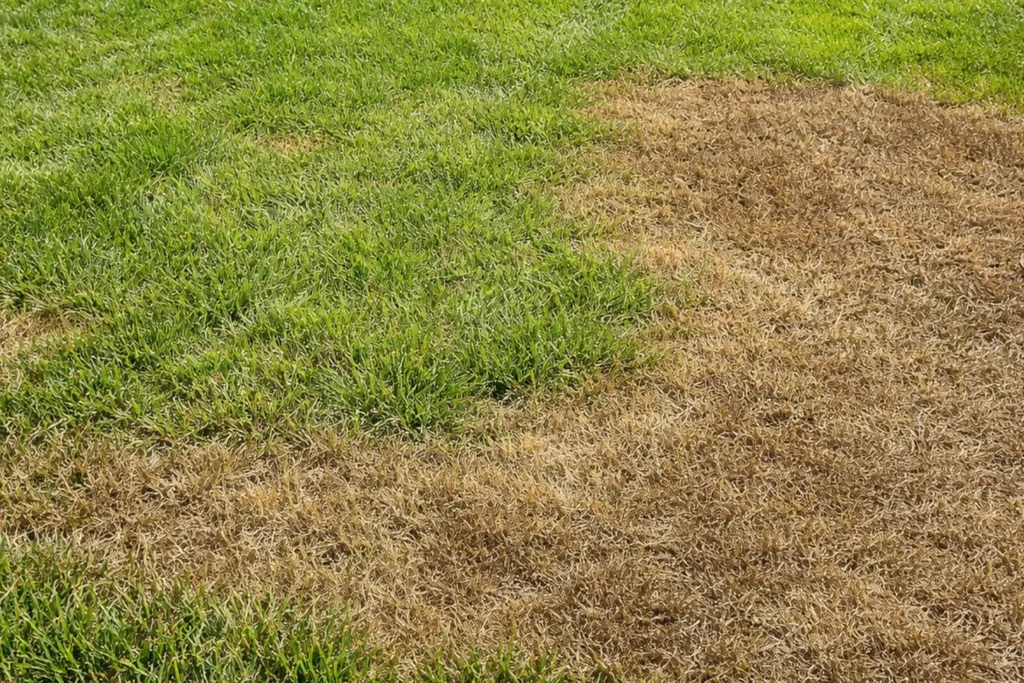
Armyworm damage can look similar to other lawn problems, but there are specific signs that point to these pests as the culprit.
Brown or Thinning Patches of Grass
The most obvious sign is irregular brown patches that seem to appear overnight. Unlike disease or drought stress, armyworm damage spreads rapidly – what looks like a small spot one day can become a large dead patch within 48 hours. The edges of affected areas often show where the caterpillars are actively feeding and moving to fresh grass.
Chewed or Ragged Grass Blades
Get down close and examine your grass blades. Armyworms chew from the tip downward, leaving ragged, uneven edges rather than the clean cut you’d see from proper mowing. You might also notice grass blades that look skeletonised, with only the midrib remaining.
Increased Bird Activity on Your Lawn
Birds know a good meal when they see one! If you’ve noticed more magpies, crows, or other birds spending time on your lawn, they might be feasting on armyworms. While this is helpful, it also confirms you’ve got a problem that needs addressing.
How to Confirm Armyworms Are Present
Here’s a simple test: Mix a tablespoon of dishwashing liquid in a bucket of water and pour it over a suspect patch (about one square metre). If armyworms are present, they’ll come to the surface within minutes, writhing and trying to escape the soapy water. This ‘drench test’ is the most reliable way to confirm an infestation and gauge its severity.
You can also check at night with a torch – armyworms are nocturnal feeders and will be actively munching away after dark.
What Causes Armyworm Infestations?
Armyworms don’t just appear randomly. Certain conditions make your lawn more vulnerable to attack.
Seasonal and Weather Triggers
Armyworms are most active during warm, humid conditions – typically from late spring through autumn in Queensland. We often see outbreaks after periods of good rainfall followed by warm weather, which creates perfect breeding conditions. Moths are also attracted to lights at night and may lay eggs on lawns near well-lit areas.
The weather patterns along the Sunshine Coast and Gympie regions make them particularly susceptible during these peak seasons, so staying alert between September and May is crucial.
Lawn Conditions That Attract Armyworms
Certain lawn conditions make your property more appealing to armyworm moths:
- Lush, well-fertilised grass (while healthy lawns are great, very lush growth attracts egg-laying moths)
- Excessive thatch buildup that provides shelter
- Poorly drained areas that stay moist
- Unmowed or overgrown grass that offers protection
Ironically, both neglected and overly pampered lawns can be at risk, though for different reasons.
How Nearby Lawns Affect Infestations
Armyworms can migrate from neighbouring properties, especially when they’ve exhausted their food supply elsewhere. If your neighbours have an infestation, you’re likely next in line. This is particularly true in suburban areas where lawns are close together. Communication with neighbours about lawn pests can help everyone protect their turf more effectively.
How to Get Rid of Armyworms in Grass Naturally
If you prefer organic or natural approaches, several methods can help control armyworm populations without resorting to chemicals straight away.
Hand Removal and Physical Control
For small infestations, hand-picking can actually work. It’s time-consuming but effective, especially if you catch the problem early. Wear gloves and check your lawn in the evening, dropping armyworms into a bucket of soapy water. You’ll need to be thorough and check daily for at least a week, as you might not get them all in one go.
Using Water to Flush Out Armyworms
The drench test we mentioned earlier doesn’t just detect armyworms – it can help control small populations too. The soapy water irritates their skin and brings them to the surface where they’re vulnerable to predators and sun exposure. For light infestations, treating affected areas this way daily for several days can reduce numbers significantly.
Encouraging Natural Predators
Birds, beneficial insects, and even some small mammals naturally prey on armyworms. You can encourage these helpers by:
- Avoiding broad-spectrum pesticides that kill beneficial insects
- Providing water sources and native plants to attract birds
- Creating habitat diversity around your property
- Maintaining healthy soil that supports beneficial organisms
Organic Treatment Options for Lawns
Several organic products can help control armyworms:
Bacillus thuringiensis (Bt): This naturally occurring bacteria produces proteins toxic to caterpillars but harmless to humans, pets, and beneficial insects. Apply it in the evening when caterpillars are feeding, and reapply after rain.
Neem oil: Works as both a repellent and growth disruptor, though it’s more effective on young larvae than mature ones.
Spinosad: A natural substance derived from soil bacteria that’s effective against armyworms while being relatively safe for beneficial insects when applied correctly.
The key with organic treatments is persistence – they typically work more slowly than chemical options and may need multiple applications.
Best Chemical Treatments for Armyworms
When infestations are severe or natural methods aren’t keeping up with the damage, chemical treatments become necessary to save your lawn.
Choosing the Right Lawn Insecticide
Not all insecticides work equally well on armyworms.
Acelepryn (chlorantraniliprole): One of the most effective options available, Acelepryn pesticide provides long-lasting protection and targets a wide range of lawn pests including armyworms. It’s also safe for beneficial insects when applied correctly, making it an excellent choice for Australian lawns.
Bifenthrin: A synthetic pyrethroid that works quickly on contact and provides residual protection.
Lambda-cyhalothrin: Another fast-acting option that kills armyworms on contact and prevents new infestations.
We stock quality products like Acelepryn that are specifically formulated for Australian conditions and turf varieties.
How to Apply Armyworm Treatments Safely
Proper application makes all the difference in treatment effectiveness and safety:
- Read the label thoroughly – this might seem obvious, but it’s crucial for safety and results
- Water your lawn lightly before application so grass blades are moist (this helps the product stick)
- Mix the product exactly as directed – more isn’t better and can damage your turf
- Apply in the evening when armyworms are actively feeding and beneficial insects are less active
- Use appropriate protective equipment – long sleeves, gloves, and closed shoes as minimum
- Water in after application if directed (some products need this, others don’t)
- Keep pets and children off treated areas until completely dry or as directed on the label
When to Apply for Best Results
Timing is everything when treating armyworms. The best results come from treating when:
- Larvae are young and small (they’re more vulnerable and have done less damage)
- Weather is calm with no rain forecast for at least 24 hours
- Temperatures are moderate (extreme heat or cold reduces effectiveness)
- Late afternoon or evening (when caterpillars are becoming active)
If you’ve noticed damage but haven’t seen the caterpillars yet, treat immediately anyway – by the time damage is visible, caterpillars are already well-established.
Lawn Types and Treatment Considerations
Different turf varieties may have different sensitivities to treatments. Most modern insecticides are safe for common Queensland varieties like buffalo, couch, and kikuyu, but always check the product label. If you’re unsure about your specific turf type, give us a call – we know the varieties we supply inside and out and can advise on safe treatment options.
How to Prevent Armyworms in Your Lawn
Prevention is always easier (and cheaper!) than cure. Here’s how to make your lawn less attractive to armyworms and more resilient if they do appear.
Proper Mowing Practices
Regular mowing isn’t just about appearances – it’s fundamental to lawn health and pest resistance. Stick to these guidelines:
- Never remove more than one-third of the grass blade at once (this stresses the plant and makes it vulnerable)
- Maintain appropriate height for your turf variety (different grasses have different ideal heights)
- Mow regularly so you’re not fighting overgrown grass that provides armyworm shelter
- Keep mower blades sharp for clean cuts that heal quickly
Our guide to cutting grass covers all the specifics for keeping your lawn in top shape. Remember, healthier grass recovers faster from any pest damage and is less attractive to moths looking for egg-laying sites.
Watering and Drainage Tips
Proper watering creates unfavourable conditions for armyworm moths while maintaining turf health:
- Water deeply but infrequently to encourage deep root growth
- Water in the early morning rather than evening (reduces humidity that moths love)
- Ensure proper drainage to avoid soggy areas where moths congregate
- Adjust watering based on season and rainfall (overwatering in humid weather invites trouble)
Good drainage also prevents the moist conditions that favour armyworm development and makes your lawn less hospitable to egg-laying moths.
Thatch Management and Aeration
Excessive thatch provides perfect hiding spots for armyworms during the day and can harbour eggs over winter. Keep thatch under control:
- Monitor thatch buildup (more than 15mm needs attention)
- Dethatch your lawn when necessary to remove this protective layer
- Aerate your lawn regularly to improve air circulation and reduce thatch accumulation
- Core aeration in particular helps break up compacted soil and improves overall lawn health
These practices not only reduce armyworm habitat but also create a healthier, more resilient lawn overall.
Fertilising to Strengthen Turf
A well-fed lawn grows stronger and recovers faster from pest damage, but balance is key – over-fertilised lawns with excessive lush growth can actually attract more moths. The sweet spot is maintaining steady, moderate growth:
- Use slow-release fertilisers for consistent nutrition
- Follow recommended application rates for your turf type and season
- Avoid heavy nitrogen applications during peak armyworm season
- Consider products like SuperGreen Lawn Food that provide balanced nutrition
Our 8-week lawn care programme takes the guesswork out of maintaining optimal lawn health throughout the year, building natural resistance to pests and diseases.
When to Seek Professional Lawn Care Help
Sometimes, despite your best efforts, armyworm problems exceed what you can manage on your own.
Signs of Severe Infestation
You should consider professional help when:
- Damage covers more than 30% of your lawn
- You’re seeing thousands of caterpillars in the drench test
- Damage is spreading faster than you can treat it
- Multiple generations are occurring despite your treatment efforts
- Your lawn has other problems (disease, nutrient deficiencies) complicating treatment
- You’ve tried treatments that haven’t worked
Don’t wait until your entire lawn is destroyed – early professional intervention saves both your grass and your wallet.
Benefits of Professional Treatment
Professional lawn care brings several advantages:
- Access to commercial-grade products not available to homeowners
- Proper equipment for even, effective application
- Experience in identifying exact pest species and life stages
- Knowledge of local conditions and seasonal patterns in the Sunshine Coast and Gympie regions
- Ability to address underlying issues that contributed to the infestation
- Guarantee of results (something you can’t get doing it yourself)
Our team has seen every variation of armyworm infestation imaginable and knows exactly what works in Queensland conditions.
Ongoing Lawn Protection Plans
Rather than fighting infestations after they occur, preventative lawn care services create year-round protection. Regular monitoring, scheduled treatments, and seasonal adjustments keep armyworms and other pests at bay before they become problems. It’s the difference between constant crisis management and peaceful lawn ownership.
Armyworm Control FAQs
What Time of Year Are Armyworms Most Active?
In Queensland, armyworms are most active from late spring through autumn (September to May), with peak activity typically occurring from December to March when conditions are warmest and most humid. However, we can see infestations outside these windows during unusually warm winters or late-season warm spells. The Sunshine Coast and Gympie areas are particularly vulnerable during humid periods following good rainfall.
How Fast Do Armyworms Damage Grass?
Alarmingly fast! A moderate infestation can destroy large sections of lawn in just 2-3 days. The damage accelerates as caterpillars mature – older, larger larvae can consume several times their body weight in grass daily. This is why early detection is so critical. If you notice damage appearing, assume you’ve got hours to days, not weeks, to act before it gets significantly worse.
Can Lawns Recover After Armyworm Damage?
Yes, lawns can absolutely recover from armyworm damage, though the extent depends on severity and grass type. If the damage only affected leaf blades and not the crown or roots, recovery can begin within weeks once you’ve eliminated the pests. However, severely damaged areas may need reseeding or new turf installation.
The key is acting quickly to stop the damage, then providing proper care – regular watering, appropriate fertilisation, and avoiding stress factors. Healthy, well-maintained turf bounces back much faster than lawns that were already struggling before the attack.
Do Armyworms Come Back Every Year?
Armyworms can return annually, especially if conditions remain favourable and nearby areas have populations. However, they don’t necessarily come back to the same lawn every year – their appearance depends on moth migration patterns, weather conditions, and whether your lawn offers attractive breeding sites.
The best defence is maintaining preventative practices year-round rather than assuming you’re safe because you haven’t seen them recently. Regular monitoring during peak season and proper lawn maintenance dramatically reduce your chances of serious infestations.
Protecting Your Lawn from Armyworm Damage
Getting rid of armyworms in grass requires quick action, the right products, and ongoing prevention. Whether you choose natural methods for light infestations or chemical treatments for severe outbreaks, the key is acting fast before these voracious feeders destroy your beautiful lawn.
Remember, a healthy lawn is your best defence against all pests, including armyworms. Regular mowing, proper watering, thatch management, and balanced fertilisation create turf that’s naturally more resistant and recovers faster when problems do occur.
If you’re dealing with armyworms in your Sunshine Coast or Gympie lawn, we’re here to help. From quality turf supplies to expert advice on pest control and ongoing lawn care, we’ve got everything you need to keep your grass looking its best year-round.
Got a question? Just call us—help is always at hand.
Call us today on 07 5478 9438
Visit our turf farms at:
Roberts Turf Supplies Sunshine Coast
520, Chevallum Road, Chevallum, QLD 4555
https://maps.app.goo.gl/yRud5D78NqBZE1fs6
Roberts Turf Supplies Gympie
54 Wide Bay Hwy Bellsbridge QLD 4570
https://maps.app.goo.gl/7ChiZSGzjoAPoFMh7