
Acelepryn Pesticide for Lawn Pest Control
Acelepryn is a professional-grade insecticide that’s become the go-to choice for Australian homeowners and turf managers who want effective, long-lasting pest control without compromising safety. Whether you’re maintaining a backyard lawn here on the Sunshine Coast or managing a sports field in Gympie, understanding how this trusted product works can save you time, money, and plenty of frustration when lawn pests strike.
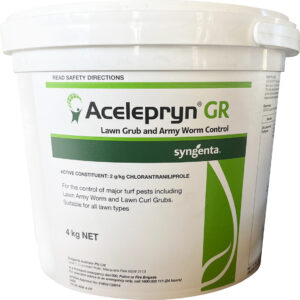
What Is Acelepryn?
Acelepryn is a professional-grade insecticide (made by Syngenta) that is widely used across Australian turf management, from residential lawns to golf courses and sports fields. Its active ingredient, chlorantraniliprole, delivers powerful pest control while maintaining a remarkably low environmental impact—making it suitable for lawns, parks, sports fields, and golf courses throughout Queensland and beyond.
What sets this insecticide apart is its long residual protection. Unlike older chemical formulations that require frequent reapplication, Acelepryn provides extended control, reducing the chemical load on your property while keeping pests at bay. It’s particularly effective on popular turf varieties like couch grass, buffalo grass, and zoysia grass—the varieties we know perform best in our local Sunshine Coast and Gympie climate.
What Pests Does Acelepryn Control?
Common Lawn Pests Targeted by Acelepryn
This insecticide targets a comprehensive range of destructive lawn pests that plague Queensland turf:
- African Black Beetle – One of the most damaging pests in Australian lawns, particularly prevalent in spring
- Argentine Stem Weevil – Attacks stems and crowns, causing widespread turf damage
- Billbugs – Larvae tunnel into grass stems, creating brown patches
- Cutworms – Night-feeding caterpillars that sever grass blades at soil level
- Lawn Armyworm – Rapidly defoliating caterpillars that can destroy turf overnight
- Sod Webworm – Larvae create silk-lined tunnels and feed on grass blades
- Various lawn grubs and caterpillars – Multiple species that feed on roots and foliage
You can find more details about these and other threats in our comprehensive list of common lawn pests.
Symptoms of Pest Infestation
How do you know when pests are attacking your lawn? Watch for these telltale signs:
- Brown, thinning patches that appear suddenly or expand rapidly
- Turf lifting easily from the soil when you tug gently (indicating root damage)
- Chewed leaf blades with irregular edges or complete defoliation
- Birds aggressively feeding on the lawn—they’re often after grubs beneath the surface
If you notice any of these symptoms in your Sapphire Buffalo, Wintergreen Couch, or Nara Native Zoysia, it’s time to take action.
How Acelepryn Works
The science behind Acelepryn pesticide is what makes it so effective. Chlorantraniliprole works by activating ryanodine receptors in target insects, causing muscle paralysis and eventual death. But here’s what makes it special: it’s highly selective, affecting target pests while sparing beneficial species like earthworms, predatory beetles, and other organisms that actually help your lawn thrive.
This selectivity also means low toxicity to humans, pets, and wildlife—something that matters when you’ve got kids playing barefoot on the lawn or dogs rolling around after a Gympie afternoon downpour. Acelepryn works both preventatively (before pests hatch) and curatively (after you’ve spotted damage), giving you flexibility in your lawn care approach.
Key Benefits of Using Acelepryn
Long-Lasting Protection
One application of Acelepryn delivers up to six months of control—impressive for any lawn insecticide. This extended protection is excellent for managing both early and late-season pest pressure, meaning you can apply it once in spring and remain protected through the worst of summer’s pest activity. For busy Sunshine Coast families, this translates to less time worrying about grub control and more time enjoying your beautiful turf.
Safe for Families, Pets, and Wildlife
Safety is where Acelepryn truly shines. It carries a non-scheduled chemical classification, meaning it’s not considered hazardous under Australian chemical regulations. Once the product has dried (for liquid formulations) or been watered in (for granules), there are no re-entry restrictions—your family and pets can return to the lawn immediately.
Importantly, Acelepryn is bee-safe when applied according to label directions. With pollinator health becoming increasingly important, choosing an insecticide that won’t harm beneficial insects is a responsible choice for your property and the wider environment.
Environmentally Friendly Profile
Because of its long residual effect, Acelepryn reduces the overall chemical load on your property compared to products requiring monthly applications. It also demonstrates minimal impact on non-target organisms—the beneficial insects, soil microbes, and other creatures that contribute to a healthy lawn ecosystem.
Acelepryn Granules vs Acelepryn Liquid
Acelepryn GR (Granules)
This is where Robert’s Turf Acelepryn Pesticide 4kg fits perfectly for homeowners. The granular formulation comes as uniform, sand-like granules designed for easy DIY application—no mixing, no measuring complicated dilution rates, no pressure sprayer needed.
Here’s what makes granules ideal for residential use:
- Applied using a standard spreader for even coverage across your lawn
- Needs watering-in with 5–10mm of irrigation to activate and move into the soil profile
- Perfect for homeowners who want a no-mixing, no-spray solution
- Provides consistent, slow-release protection across the treated area
- Ideal for large lawns, nature strips, and general residential turf
- Less risk of misapplication compared to liquid concentrates
- Suitable for regular lawn maintenance or preventative grub control
Whether you’ve installed Augusta Zoysia or another premium variety from our farms, granules offer straightforward protection without the complexity of professional equipment.
Acelepryn Liquid (Professional Grade)
The liquid formulation is a concentrated formula designed for calibrated pressure sprayers. It’s predominantly used by landscapers, greenkeepers, and turf technicians who need precise application rates for golf greens, sports fields, and other high-precision turf areas.
Which One Should You Choose?
For most homeowners and DIY users, granules are the way to go—they’re simpler, safer to handle, and deliver excellent results without specialised equipment. Liquid formulations are best left to commercial turf operators who have the calibrated sprayers and technical knowledge to apply them at precise rates.
How to Use Acelepryn
Using Acelepryn effectively comes down to understanding your lawn’s size, choosing the right product format, and following a few straightforward steps. For most Sunshine Coast and Gympie homeowners, the granular formulation offers the simplest path to success.
Start by measuring your lawn area accurately—this determines how much product you’ll need. For the 4kg granular pack available at Robert’s Turf, you’ll get coverage for approximately 265–530m² depending on application rate and pest pressure. A typical residential lawn (200–300m²) can be treated with a single bag for preventative control.
The application process itself is uncomplicated: load your spreader with Acelepryn granules, walk your lawn in overlapping passes to ensure even coverage, then water thoroughly with 5–10mm of irrigation. That watering step is crucial—it activates the product and moves it into the soil profile where pests feed and live. Think of it as “unlocking” the protection.
Timing matters too. Apply when pests are most vulnerable—typically early spring for prevention or early summer when you first notice pest activity. You don’t need to wait until damage is severe; in fact, preventative application works better and saves your turf from unnecessary stress.
The beauty of Acelepryn is its flexibility. You can apply it to any established turf variety, whether you’ve got buffalo, couch, zoysia, or kikuyu. Once watered in, there’s no need to keep family or pets off the lawn—you can all get back to enjoying your outdoor space immediately.
When to Apply Acelepryn
Best Seasonal Timing in Australia
Timing your application correctly maximises effectiveness and extends protection throughout the pest season. In our Queensland climate, consider these guidelines:
- Early spring – Apply preventatively before grub outbreaks begin, targeting the lifecycle before egg hatch
- Early to mid-summer – Ideal for active armyworm and sod webworm control when these pests are most aggressive
- Before peak egg hatch – This timing delivers maximum effectiveness, stopping infestations before they establish
Climate-Specific Notes
Different regions face different pest pressures:
- Queensland (Sunshine Coast/Gympie area) – Armyworms peak in early summer; African Black Beetle pressure builds through spring
- NSW/VIC – Grub pressure is highest from late spring through early summer
- WA – Watch particularly for African Black Beetle activity in spring months
Step-by-Step Application Guide
Applying Acelepryn GR (Granules)
Getting your application right ensures even coverage and maximum pest control:
- Use a calibrated spreader for even distribution across your lawn—walking at a steady pace helps maintain consistency
- Follow labelled application rates precisely (typically 750g–1.5kg per 100m², depending on pest pressure)
- Water in thoroughly after application with 5–10mm of irrigation to move the product into the soil where pests feed
- Avoid applying right before heavy rain which might wash the product away before it’s properly incorporated
Applying Acelepryn Liquid
If you’re using the professional liquid formulation:
- Measure lawn area accurately to calculate the correct amount needed
- Mix according to labelled dilution in your spray tank—never guess at mixing rates
- Apply with a pressure or boom sprayer using even, overlapping passes
- Light watering may be recommended depending on target pest (check label directions)
Common Application Mistakes
Even with a straightforward product like Acelepryn, mistakes happen. Avoid these common pitfalls:
- Not watering in granules – Without irrigation, the product can’t move into the soil profile where it’s needed
- Applying too little product – Under-dosing won’t provide adequate control
- Using in the wrong season – Applying after pests have caused major damage is less effective than preventative treatment
- Mixing incompatible chemicals (liquid formulations) – Always check compatibility before tank-mixing
How Long Does Acelepryn Take to Work?
You won’t see overnight results, but the timeline is predictable. Pests begin to reduce within 4–7 days as they ingest treated turf and the active ingredient takes effect. Full protection is achieved within 2–3 weeks as the product establishes in the soil profile. From there, residual control lasts multiple months—up to six months under ideal conditions—providing season-long peace of mind.
Is Acelepryn Safe? (Safety & Regulations)
Safety concerns are valid when applying any chemical to your property, but Acelepryn has an excellent profile. It carries non-scheduled chemical status under Australian regulations, meaning it’s not classified as hazardous. There’s no strong odour during or after application, it won’t stain pathways or pavers, and minimal personal protective equipment (PPE) is needed when handling granules—though basic precautions like avoiding ingestion and washing hands after use are still sensible.
As with any lawn care product, always follow label directions exactly. The label is the legal document that ensures safe, effective use.
Acelepryn vs Other Lawn Insecticides
Acelepryn vs Bifenthrin
Bifenthrin-based products offer fast-acting knockdown of lawn pests, which sounds appealing. However, Acelepryn offers significant advantages: it’s safer for beneficial insects (including bees), provides longer-lasting control, and has a more favourable environmental profile. Bifenthrin works quickly but requires more frequent applications and is harsher on non-target organisms.
Acelepryn vs Imidacloprid
Imidacloprid represents older chemistry that’s been widely used for lawn grub control. While effective, Acelepryn surpasses it in several ways: it’s safer for bees and pollinators, controls more pest life stages (eggs, larvae, and adults), and provides longer residual protection. Imidacloprid typically requires reapplication every 6–8 weeks, whereas Acelepryn can last six months.
FAQs About Acelepryn
Is Acelepryn safe for pets?
Yes, once watered in (for granules) or dried (for liquid), there are no restrictions on pets returning to treated areas. The product has low mammalian toxicity and won’t harm dogs, cats, or other animals when used as directed.
Do I need to mow before applying?
Mowing isn’t strictly necessary, but cutting your lawn to normal height before application ensures better contact between the product and the soil. Just remember our golden rule: never remove more than one-third of the grass blade length at once, or you’ll stress your turf.
Can I apply fertiliser at the same time?
Yes, Acelepryn granules can be applied alongside most fertilisers. In fact, combining treatments can save time and effort. However, always check product labels for any specific compatibility warnings, and avoid mixing liquid formulations unless you’ve confirmed compatibility.
How often should I reapply?
With up to six months of residual control, most lawns only need one or two applications per year. A spring application provides protection through summer, while a second application in late summer or early autumn can extend protection through the cooler months if pest pressure remains high.
Will it kill lawn grubs immediately?
Acelepryn isn’t a knockdown product—it works gradually over several days. You’ll notice reduced pest activity within a week, with full control established over 2–3 weeks. This gradual action is part of what makes it safer for non-target species.
Protect Your Turf Investment with Proven Pest Control
Your lawn represents an investment in your property’s appearance, value, and your family’s outdoor enjoyment. Whether you’ve recently installed premium turf from our Sunshine Coast or Gympie farms or you’re maintaining established grass, protecting it from destructive pests should be part of your regular care routine.
Acelepryn pesticide delivers the long-lasting, safe, and effective control you need without the frequent reapplication cycles of older products. It’s particularly well-suited to our Sunshine Coast and Gympie climate where pest pressure builds through spring and summer.
Ready to protect your lawn? We stock Acelepryn Pesticide 4kg at both our locations, and we’re always happy to provide advice on application timing, rates, and technique suited to your specific turf variety. Don’t wait until pest damage becomes severe—preventative treatment is always easier (and more effective) than trying to rescue a heavily damaged lawn.
Visit us at either farm location, give us a call, or browse our online shop to get the protection your lawn deserves.
Got a question? Just call us—help is always at hand.
Call us today on 07 5478 9438
Visit our turf farms at:
Roberts Turf Supplies Sunshine Coast
520, Chevallum Road,
Chevallum, QLD 4555
https://maps.app.goo.gl/yRud5D78NqBZE1fs6
Roberts Turf Supplies Gympie
54 Wide Bay Hwy
Bellsbridge QLD 4570
https://maps.app.goo.gl/7ChiZSGzjoAPoFMh7