
How to Remove Mullumbimby Couch from Your Lawn
If you’ve noticed a coarse, invasive grass creeping through your lawn that just won’t quit — chances are you’re dealing with Mullumbimby couch. It’s one of the most stubborn lawn weeds in Southeast Queensland, and for homeowners across the Sunshine Coast and Gympie regions, it can turn a beautiful lawn into a patchy, uneven mess seemingly overnight.
The good news? With the right knowledge, the right timing, and the right products, Mullumbimby couch removal is absolutely achievable. Whether you’re managing a small infestation or dealing with a full-blown takeover, this guide will walk you through everything you need to know about Mullumbimby couch — from identifying the weed to restoring your lawn to its former glory.
Understanding Mullumbimby Couch
What Is Mullumbimby Couch?
Mullumbimby couch (Cyperus brevifolius), also known as Globe Kyllinga, Perennial Greenhead Sedge, Short-Leaf Flatsedge, is a perennial, warm-season grass weed native to Australia. Despite its name, it’s not a true couch grass — it simply earns the label because of its creeping, mat-forming growth habit. It thrives in the warm, humid conditions typical of Southeast Queensland, making lawns in the Sunshine Coast and Gympie areas particularly vulnerable.
It’s classified as a weed of national significance in many Australian states because of its ability to outcompete desirable turf grasses and persist in the landscape long after attempts to control it. You can learn more about how weeds like this are classified in our guide to the common classification of weeds.
How Mullumbimby Couch Spreads in Lawns
Mullumbimby couch spreads aggressively through both stolons (above-ground runners) and rhizomes (underground stems). This dual-spreading mechanism is what makes Mullumbimby couch removal so challenging. A single plant can send runners metres in all directions, and even small fragments of rhizome left in the soil are capable of regenerating into a new plant.
It also spreads via water movement, mowing equipment, and foot traffic — meaning once it gets a foothold in your lawn, it can quickly colonise new areas if left unmanaged.
Why It Becomes Difficult to Control
The challenge with controlling Mullumbimby couch lies in its resilience. Its rhizomes grow deep into the soil and are easily missed during hand removal. It recovers quickly from mowing, drought, and even some herbicide treatments. Repeated or well-timed interventions are almost always necessary for effective Mullumbimby couch control.
It also has a tendency to blend in with desirable grass species early in its growth, making early identification tricky for the untrained eye.
Common Lawn Types Affected
Mullumbimby couch doesn’t discriminate — it will invade almost any warm-season turf. However, some of the most commonly affected include:
| Lawn Type | Vulnerability |
| Buffalo grass | High — open canopy allows invasion |
| Zoysia grass | Moderate — dense varieties more resistant |
| Couch grass | High — similar growth habit can mask infestation |
| Kikuyu | High — fast growth doesn’t always outpace Mullumbimby couch |
If you’re unsure what type of turf you have, browse our range of buffalo grass varieties, zoysia grass varieties, and couch grass varieties to help identify your turf.
Identifying Mullumbimby Couch in Your Lawn
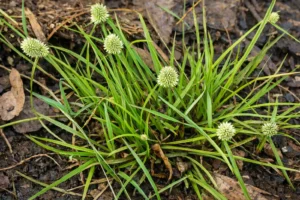
Visual Characteristics (Leaf Shape, Growth Habit, Colour)
Mullumbimby couch has a distinctive look once you know what to search for:
- Leaf shape: Flat, strap-like leaves that are wider than most fine-leafed turf grasses, typically 5–10mm wide.
- Colour: Mid to dark green, often appearing slightly glossy on the upper surface.
- Growth habit: Creeping and mat-forming, with stems that root at the nodes wherever they contact moist soil.
- Stem structure: Compressed, flat stems that spread horizontally close to the ground.
- Seedheads: Produces finger-like seedheads from late spring through summer, which aids in spreading.
Differences Between Mullumbimby Couch and Desirable Turf Grasses
It’s easy to confuse Mullumbimby couch with your desirable lawn grasses — especially couch or buffalo — when it first appears. Here’s a quick comparison:
| Feature | Mullumbimby Couch | Buffalo Grass | Couch Grass |
| Leaf width | 5–10mm | 7–10mm | 2–4mm |
| Leaf texture | Smooth, slightly glossy | Broad, soft | Fine, narrow |
| Stem shape | Flat, compressed | Round stolons | Wiry, thin runners |
| Root type | Stolons + rhizomes | Stolons only | Stolons + rhizomes |
| Seedhead | Finger-like spikes | Rare | Fine spikes |
When in doubt, pull up a small section and inspect the root system — Mullumbimby couch will reveal underground rhizomes that differ from most desirable turf grasses.
Signs of Infestation in Established Lawns
- Patches of coarser, faster-growing grass standing above your main turf canopy
- Uneven lawn texture that persists even after mowing
- Visible horizontal runners crossing bare soil or garden edges
- Rapid re-growth in areas previously mown or treated
- Clumping growth patterns that disrupt the uniformity of your lawn
When to Confirm Identification Before Treatment
Always confirm that you’re dealing with Mullumbimby couch before applying any herbicide. Misidentification can lead to treating your desirable lawn with the wrong product — causing unnecessary damage. If you’re unsure, bring a sample to our team at Robert’s Turf Supplies for advice, or consult a local agronomist.
Why Removing Mullumbimby Couch Is Important
Impact on Lawn Appearance
A Mullumbimby couch infestation creates a visibly uneven lawn. Its coarser texture and different colour tone stand out against fine-leafed turf varieties, producing an unsightly patchwork effect. Left unchecked, it can completely transform an otherwise pristine lawn into something that looks neglected — even if you’re mowing and watering regularly.
Competition for Nutrients, Water, and Sunlight
Mullumbimby couch is a fierce competitor. It actively draws nutrients, water, and sunlight away from your desirable turf grasses, causing them to thin out and weaken over time. As your lawn’s density drops, Mullumbimby couch fills the gaps — accelerating the cycle. Effective Mullumbimby couch control is therefore about protecting your investment in quality turf.
Long-Term Damage to Lawn Density
Without intervention, Mullumbimby couch can completely overrun a lawn within a few growing seasons. Once the desirable turf has thinned significantly, re-establishing a quality lawn often requires more than just weed treatment — it may mean returfing entire sections.
Preventing Further Spread Across the Property
Mullumbimby couch doesn’t stay in one spot. Its runners and rhizomes move readily into garden beds, neighbouring lawn areas, and even beyond property boundaries. Early and consistent Mullumbimby couch removal protects not just your lawn, but your entire yard — and your neighbours’ lawns too.
Preparation Before Removal
Assessing the Severity of Infestation
Before choosing your removal strategy, take stock of how widespread the infestation is:
- Minor infestation: Isolated patches covering less than 20% of your lawn — manual removal combined with spot herbicide treatment is usually sufficient.
- Moderate infestation: Multiple spreading patches — a combination of selective herbicide and manual methods will be needed.
- Severe infestation: Mullumbimby couch is dominant across the lawn — a full-lawn treatment plan and possible returfing may be required.
Determining Your Lawn Type
Your lawn type determines which herbicides are safe to use. Some products that effectively target Mullumbimby couch can also damage or kill certain desirable turf grasses. Identifying your lawn type before beginning any chemical Mullumbimby couch control is essential.
Best Time of Year for Treatment
In Southeast Queensland’s climate, the best time to treat Mullumbimby couch is during its active growing season — typically from spring through early autumn (September to March). During this period, the plant is actively translocating nutrients and is more susceptible to herbicide uptake. Avoid treating during cold snaps or drought stress, as this reduces herbicide effectiveness.
Safety Precautions Before Applying Herbicides
- Always read the product label in full before use
- Wear appropriate personal protective equipment (PPE): gloves, eye protection, long-sleeved clothing
- Keep children and pets off treated areas until dry
- Avoid applying on windy days to prevent spray drift
- Store products in a cool, dry place away from children and animals
Tools and Equipment You May Need
- Hand trowel or garden fork (for manual removal)
- Gloves and safety glasses
- Pump sprayer or knapsack sprayer (for herbicide application)
- Measuring cup and calibrated sprayer for accurate dilution
- Flagging tape to mark treated areas
- Lawn repair materials (topsoil, turf, or seed) for post-treatment recovery
Manual Removal Methods
Hand Digging and Root Removal
For minor Mullumbimby couch infestations, hand removal can be effective — especially in garden beds or small lawn patches. Use a hand trowel or fork to loosen the soil around the weed, then carefully lift the entire plant, including as much of the root system as possible.
Work slowly and methodically. Rushing this process and breaking roots or rhizomes will only spread the problem.
Removing Rhizomes to Prevent Regrowth
This is the most critical step in manual Mullumbimby couch removal. The underground rhizomes are the plant’s survival mechanism — even a small fragment left in the soil can generate a new plant. Sift through the excavated soil carefully to retrieve all root material, and inspect the surrounding area for any runners that may have spread beyond the main plant.
Disposal Best Practices
Do not compost Mullumbimby couch. Even detached runners and rhizomes can survive and re-root if conditions are right. Instead:
- Seal removed material in plastic bags
- Dispose of in your general waste bin (not green waste)
- Allow no soil contact during transport to prevent accidental spread
When Manual Removal Is Not Enough
Manual removal alone is rarely sufficient for moderate to severe infestations. If Mullumbimby couch has spread extensively through your lawn, or if rhizomes are deeply embedded in the soil, chemical Mullumbimby couch control will be necessary to achieve complete elimination.
Chemical Control Options
Using Selective Herbicides for Couch Control
Selective herbicides target specific plant types while leaving desirable grasses unharmed — when used correctly. The key is choosing a product registered for Mullumbimby couch control that is also safe for your particular lawn type. Always check the label carefully.
Products in the sulfonylurea herbicide group (including halosulfuron-methyl, found in Sedgehammer) have proven effective against Mullumbimby couch and similar grassy weeds in certain turf types.
Spot Treatment vs Broad Application
- Spot treatment is best for isolated patches. Apply directly to the target weed, avoiding surrounding desirable turf as much as possible.
- Broad application may be necessary for widespread infestations, but carries a greater risk of affecting desirable turf. Always confirm product suitability for your lawn type before broad application.
Application Timing for Best Results
Apply herbicide when:
- Mullumbimby couch is actively growing (spring through early autumn)
- Weather is calm — no rain forecast for at least 4–6 hours post-application
- Temperatures are moderate — avoid application during extreme heat or cold
- Your lawn is not under drought stress
Follow-Up Treatments for Persistent Growth
Mullumbimby couch rarely succumbs to a single treatment. Plan for at least two to three applications spaced 4–6 weeks apart. After each treatment, monitor your lawn closely for signs of regrowth and re-treat as needed. Persistence is key to successful Mullumbimby couch control.
Using Sedgehammer Herbicide for Control
What Is Sedgehammer Herbicide?
Sedgehammer is a professional-grade selective herbicide containing the active ingredient halosulfuron-methyl. While originally developed for nutsedge control, Sedgehammer has proven effective against a range of difficult lawn weeds, including Mullumbimby couch, in certain turf grass situations. You can read more about how it works on our dedicated page about Sedgehammer herbicide for nutsedge and turf grass control.
How Sedgehammer Works on Tough Lawn Weeds
Sedgehammer works by inhibiting an enzyme essential for plant growth (acetolactate synthase or ALS). When absorbed through the leaves and roots of target weeds, it disrupts their ability to produce amino acids necessary for growth. The result is a slow but highly effective kill that also reaches the rhizomes — which is critical for Mullumbimby couch removal, where underground root structures are the main driver of regrowth.
Results typically become visible within 2–4 weeks of application, with full suppression taking several weeks longer.
Proper Application Guidelines
- Mix Sedgehammer according to the label rate — typically a small amount of product per litre of water, plus a non-ionic surfactant to aid absorption
- Apply using a calibrated sprayer to ensure even coverage
- Thoroughly wet the foliage of target weeds without excessive runoff
- Do not mow for 2–3 days before or after application, to ensure the herbicide is absorbed effectively
- Apply during active weed growth for best results
Safety Considerations and Label Instructions
- Always read and follow the product label — it’s a legal requirement in Australia
- Wear appropriate PPE during mixing and application
- Avoid contact with desirable plants and waterways
- Keep pets and children off treated areas until the product has fully dried
- Store in original container in a secure location
Integrating Sedgehammer Into a Lawn Recovery Plan
Sedgehammer works best as part of a broader Mullumbimby couch control strategy, not as a standalone fix. Use it alongside:
- Manual removal of as much weed material as possible before treatment
- Follow-up applications every 4–6 weeks during the growing season
- Lawn renovation to repair areas affected by weed removal
- A fertilisation programme to strengthen your desirable turf post-treatment
Lawn Recovery After Removal
Repairing Damaged Areas
Once Mullumbimby couch has been removed — whether manually, chemically, or both — you’ll likely have bare or thin patches to address. Left untreated, these gaps will simply be recolonised by weeds. Act quickly to restore lawn coverage.
For small areas, top-dress with quality topsoil and oversow with compatible grass seed. For larger areas, laying fresh turf is the most reliable and fastest solution.
Reseeding or Returfing Options
For homeowners on the Sunshine Coast or in the Gympie region, Robert’s Turf Supplies offers a range of premium turf varieties suited to the local climate. Returfing with a dense, vigorous variety is one of the best long-term defences against Mullumbimby couch reinvasion — a thick, healthy lawn leaves little room for weeds to establish.
Improving Soil Health Post-Treatment
Herbicide use and weed removal can disturb your soil’s microbial balance and structure. Support recovery by:
- Aerating compacted areas to improve drainage and root penetration
- Applying a quality wetting agent if water repellency is an issue
- Adding organic matter or compost to improve soil structure
- Checking soil pH — most turf grasses prefer a pH of 6.0–7.0
Fertilising for Strong Turf Regrowth
A well-fed lawn is your best line of defence against weed reinvasion. After treatment, give your lawn a boost with a balanced fertiliser to encourage vigorous regrowth. Our Supergreen Lawn Food 7kg is a great option for promoting strong, dense regrowth in recovering turf — helping your lawn fill in faster and crowd out any remaining weed competition.
Apply fertiliser according to the product label and water in well after application.
Preventing Mullumbimby Couch From Returning
Establishing a Strong, Dense Lawn
Prevention starts with your lawn’s density. A thick, healthy lawn is far more resistant to weed invasion than a thin or stressed one. Choose a turf variety suited to your local conditions and follow best-practice maintenance to keep it performing at its best.
Dense varieties like certain zoysia grasses can be particularly effective at outcompeting weeds.
Proper Mowing Practices
Mowing at the correct height for your turf variety encourages lateral growth and density, which helps shade out weed seedlings. A good rule of thumb: never remove more than one-third of the grass blade length at a time. Scalping your lawn creates stress and gaps that Mullumbimby couch — and other weeds — are quick to exploit.
Regular Fertilisation Schedule
Regular, balanced fertilisation keeps your lawn vigorous and competitive. A lawn that’s well-fed is better positioned to recover quickly from stress and resist weed encroachment. We recommend fertilising during the growing season (spring through autumn) using a quality product like our Supergreen Lawn Food.
Avoid over-fertilising with nitrogen alone, as this can promote lush top growth at the expense of root depth.
Watering Strategies to Discourage Weed Growth
Deep, infrequent watering encourages your lawn’s roots to grow deep into the soil — making it more drought-tolerant and resilient. Frequent, shallow watering keeps root systems close to the surface and can actually favour weed species like Mullumbimby couch. Aim to water deeply two to three times per week rather than lightly every day.
Avoid overwatering — consistently moist soil near the surface is ideal for weed germination and stolon rooting.
Ongoing Weed Monitoring and Maintenance
Stay proactive. Walk your lawn regularly and address any signs of Mullumbimby couch or other weed reinvasion early — when plants are small and not yet established, they’re far easier to manage. Spot-treat as needed and keep a record of where infestations have previously occurred, as these areas are most likely to see regrowth.
Professional Advice and Quality Lawn Care Products
When to Seek Expert Guidance
If your Mullumbimby couch infestation is severe, if you’re unsure which herbicide is safe for your lawn type, or if previous treatment attempts haven’t worked, it’s time to seek professional advice. Incorrect herbicide selection or application can cause significant damage to your desirable turf and set your lawn recovery back considerably.
Choosing the Right Weed Control Products
Not all herbicides are created equal, and not all are appropriate for every situation. Consider:
- Your lawn type — different turf grasses have different herbicide tolerances
- Infestation severity — spot treatments vs. broad applications
- Active growing conditions — timing herbicide use to coincide with active Mullumbimby couch growth
- Label compliance — always use products as directed and within registered uses
Supporting Your Lawn With Quality Turf Supplies
Great Mullumbimby couch control is only half the battle — the other half is building a lawn that’s resilient enough to stay weed-free. Quality turf, premium lawn care products, and good maintenance practices all play a role.
How Robert’s Turf Supplies Can Help With Lawn Weed Management
At Robert’s Turf Supplies, we’ve been helping homeowners across the Sunshine Coast and Gympie regions grow and maintain beautiful lawns for years. Whether you need advice on the right turf variety, help choosing a Mullumbimby couch herbicide, or quality products to support your lawn’s recovery, our team is here to help.
Explore our full range of lawn care services, or visit us at our Sunshine Coast or Gympie locations for personalised advice.
Frequently Asked Questions About Mullumbimby Couch
Can Mullumbimby Couch Spread to Neighbouring Lawns?
Yes — Mullumbimby couch can spread beyond your property boundary via runners, water flow, and mowing equipment. Prompt management not only protects your lawn but also helps prevent the weed from becoming a neighbourhood problem.
How Long Does It Take to Fully Eliminate?
Full Mullumbimby couch removal rarely happens after a single treatment. Most homeowners should expect a treatment programme of 3–6 months, involving multiple herbicide applications and ongoing monitoring. Patience and consistency are essential.
Will Treatment Damage My Existing Lawn?
When used correctly and on compatible turf types, selective herbicides like Sedgehammer should not damage your desirable lawn grasses. Always confirm compatibility with your turf type before applying, and follow label instructions carefully. Incorrect use can result in turf damage.
Is Repeated Application Necessary?
Almost always, yes. Mullumbimby couch’s deep rhizomes and rapid regrowth mean a single application rarely eliminates the problem entirely. Plan for follow-up treatments every 4–6 weeks during the active growing season until no regrowth is observed.
What Is the Most Effective Long-Term Solution?
The most effective long-term solution combines chemical Mullumbimby couch control (with an appropriate selective herbicide like Sedgehammer), prompt lawn renovation of affected areas, and ongoing maintenance practices that promote a dense, healthy, competitive lawn. There’s no single silver bullet — consistent effort is what gets results.
Take Back Your Lawn — and Keep It That Way
Mullumbimby couch is a formidable opponent, but it’s not unbeatable. With the right identification, a well-timed treatment plan using an effective herbicide like Sedgehammer, and a commitment to post-removal lawn care, you can reclaim your lawn and keep it looking its best season after season.
If you’re ready to take action, we’re ready to help. Whether you’re in the Sunshine Coast or Gympie, Robert’s Turf Supplies is your local partner for a weed-free lawn.
Got a question? Just call us — help is always at hand.
Call us today on 07 5478 9438
Visit our turf farms at:
Roberts Turf Supplies Sunshine Coast
520, Chevallum Road,
Chevallum, QLD 4555
https://maps.app.goo.gl/yRud5D78NqBZE1fs6
Roberts Turf Supplies Gympie
54 Wide Bay Hwy
Bellsbridge QLD 4570
https://maps.app.goo.gl/7ChiZSGzjoAPoFMh7